
Introduction
Managing employees is not just about tracking who is working and who is on leave. For small businesses, handling attendance, leave requests, and payroll together can quickly become overwhelming.
Many companies still rely on Excel sheets, emails, or manual tracking — but this approach leads to:
- Errors in payroll
- Miscommunication
- Time wastage
In fact, traditional methods often become unreliable and error-prone as businesses grow
That’s why modern businesses are shifting to employee leave and attendance management systems that handle everything in one place.
In this guide, you’ll learn:
- How to manage leave and attendance efficiently
- Common problems businesses face
- Best practices and tools to automate HR processes
What is an Employee Leave and Attendance Management System?
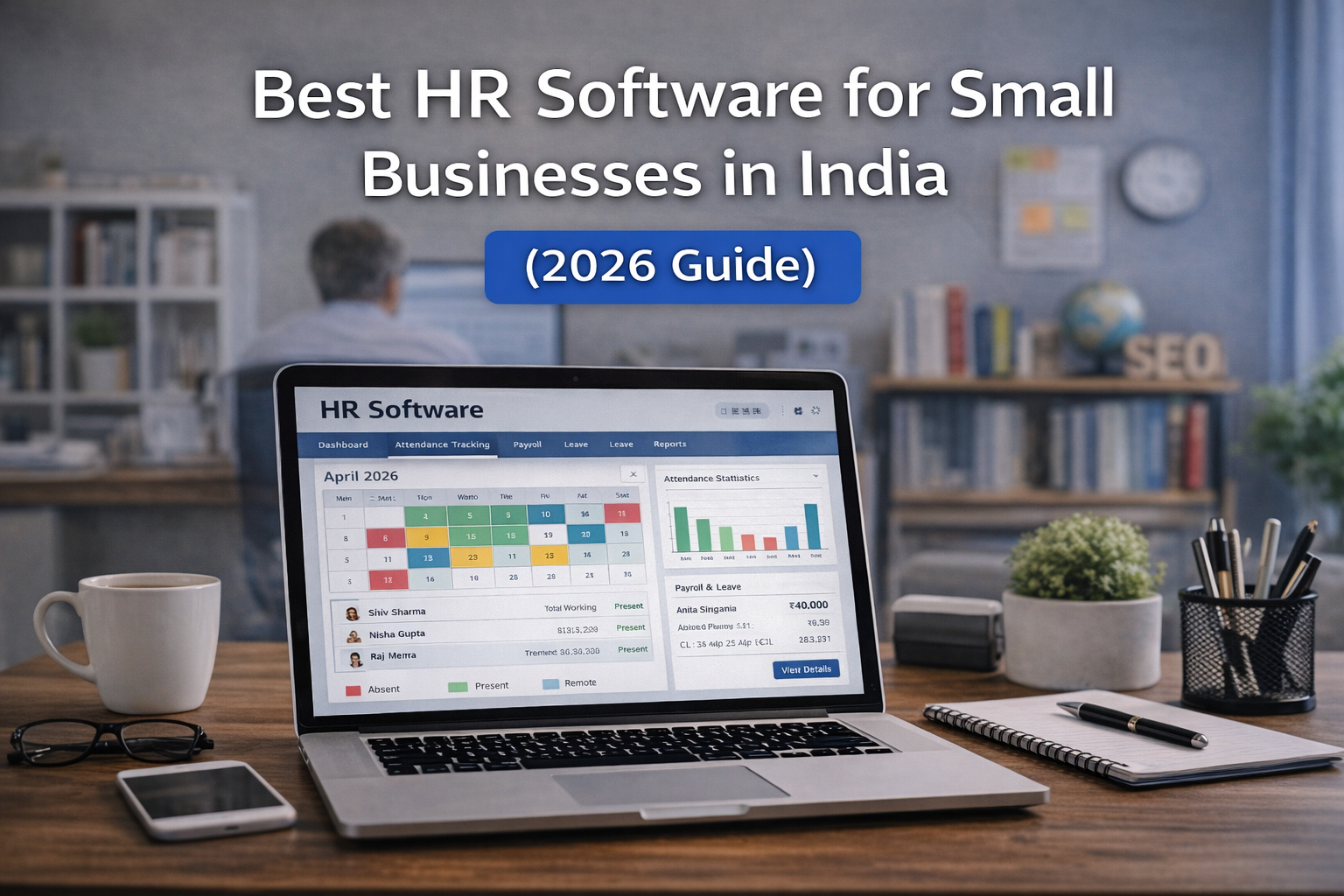
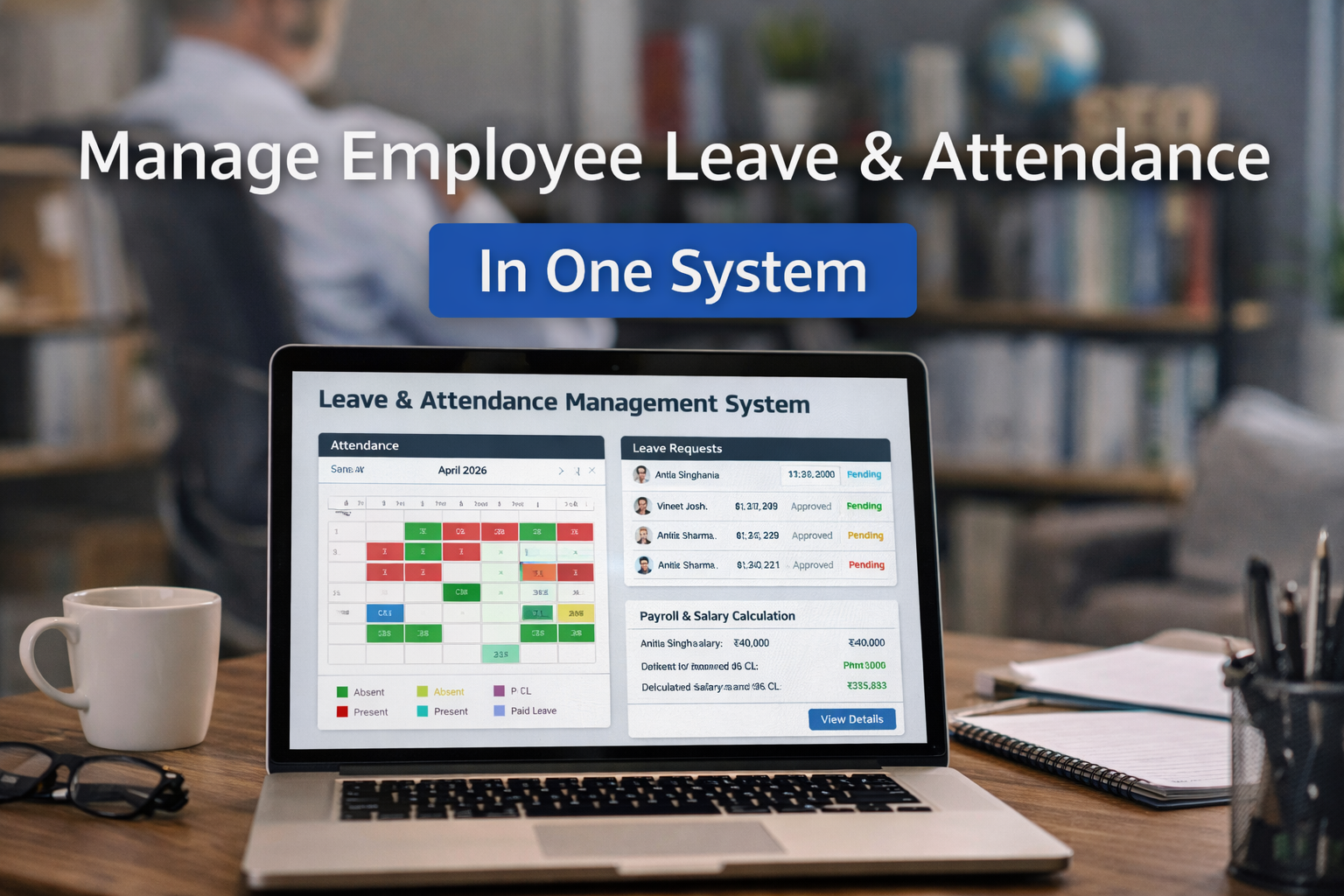
An employee leave and attendance management system is a digital solution that helps businesses:
- Track employee working hours
- Manage leave requests
- Calculate payroll automatically
- Maintain accurate records
Modern HR software integrates:
- Attendance tracking
- Leave management
- Payroll processing
- into one centralized system
This eliminates the need for multiple tools and manual tracking.
Why Managing Leave and Attendance Together is Important
1. Accurate Payroll Calculation
Payroll depends directly on attendance and leave data.
If:
- An employee takes unpaid leave
- Works overtime
- Is absent
👉 It impacts salary calculations.
Automated systems ensure:
- Correct salary deductions
- Accurate payslips
- Compliance with tax rules
2. Better Transparency
Employees can:
- Check leave balance
- Track attendance
- Apply for leave
Managers can:
- Approve requests instantly
- Avoid conflicts
3. Reduced Errors
Manual systems often lead to:
- Duplicate entries
- Miscalculations
- Lost records
Automation eliminates these issues.
4. Saves Time for HR Teams
Instead of spending hours on:
- Excel sheets
- Email approvals
HR teams can focus on:
- Employee engagement
- Business growth
Common Problems in Manual Leave & Attendance Management
❌ 1. Excel Dependency
Many small businesses use spreadsheets.
Problems:
- Hard to scale
- Prone to errors
- No real-time updates
❌ 2. Email-Based Leave Requests
Issues:
- Lost emails
- Delayed approvals
- No tracking system
❌ 3. Payroll Mistakes
Manual calculation leads to:
- Salary errors
- Compliance risks
❌ 4. Lack of Visibility
Managers don’t know:
- Who is available
- Who is on leave
How to Manage Leave and Attendance in One System (Step-by-Step)
Step 1: Centralize Employee Data
Store:
- Employee details
- Attendance records
- Leave balances
in one platform.
Step 2: Automate Attendance Tracking
Use:
- Mobile check-in
- Web login
- GPS tracking
Modern tools even support biometric and geo-based attendance
Step 3: Implement Leave Management Workflow
A good system should allow:
- Leave application
- Manager approval
- Automatic leave balance updates
Step 4: Integrate Payroll System
Attendance + Leave → Payroll
System should:
- Calculate salary automatically
- Deduct leaves
- Generate payslips
Step 5: Use Real-Time Reports
Track:
- Absenteeism
- Overtime
- Leave trends
This helps in better decision-making.
Key Features to Look for in a Leave & Attendance System
✅ 1. Employee Self-Service Portal
Employees can:
- Apply leave
- Check attendance
- Download payslips
✅ 2. Automated Payroll Integration
Ensures:
- Accurate salary calculation
- Compliance with laws
✅ 3. Attendance Tracking Options
- Biometric
- GPS
- Mobile app
✅ 4. Leave Policy Customization
Supports:
- Casual leave
- Sick leave
- Paid leave
✅ 5. Reporting & Analytics
Helps track:
- Employee productivity
- Attendance trends
Benefits of Using an All-in-One HR System
Modern HR systems act like a complete business assistant:
🚀 1. Improved Efficiency
Automation reduces manual work.
🚀 2. Better Employee Experience
Employees get transparency and control.
🚀 3. Cost Savings
Less time + fewer errors = more savings.
🚀 4. Scalability
System grows with your business.
Why Small Businesses Need HR Automation
Small businesses often don’t have dedicated HR teams.
An HR system helps:
- Automate repetitive tasks
- Reduce dependency on manual work
- Improve compliance
Modern tools even combine payroll, attendance, and employee management in one platform to simplify operations
Best Use Case: Managing 10–50 Employees
If your company has:
- 10–50 employees
You need:
- Simple
- Affordable
- Scalable HR software
This is where tools like LeaveTrackr come in.
How LeaveTrackr Solves These Problems
With LeaveTrackr, you can:
✅ Manage Leave Easily
- Apply & approve leave in one click
✅ Track Attendance
- Real-time attendance tracking
✅ Automate Payroll
- Error-free salary calculation
✅ Centralized Dashboard
- Everything in one place
✅ Save Time & Effort
- No more Excel or manual tracking
Final Thoughts
Managing employee leave and attendance separately creates confusion, errors, and inefficiency.
The solution is simple:
👉 Use one integrated system
By combining:
- Leave management
- Attendance tracking
- Payroll automation
You can:
- Save time
- Reduce errors
- Improve productivity
If you want to simplify your HR operations:
👉 Try Free LeaveTrackr today